
What Is Good Audio Latency?
What is good audio latency? Learn the ms ranges that feel responsive for recording, monitoring, mixing, and live use on Windows DAW systems.
What Is Good Audio Latency? Read More »
What is good audio latency? Learn the ms ranges that feel responsive for recording, monitoring, mixing, and live use on Windows DAW systems.
What Is Good Audio Latency? Read More »
Look ahead’s tradeoff is that all tracks need the same amount of delay as the maximum amount of look ahead that applies to a processor. A DAW’s Plug-in Delay Compensation (PDC) feature ensures all tracks remain in sync. However, PDC is part of a DAW’s audio engine, and third-party plug-ins typically can’t tie into PDC. But no worries—with this tip, you can add look ahead for any sidechain-capable dynamics processor, with any DAW.
Add Look Ahead to Any Dynamics FX with a Sidechain Read More »
ADK Pro Audio out of business — who will help you with your pro audio PC? If you need help with your pro audio PC built by ADK pro audio, PCAudioLabs is here to help. With ADK pro audio out of business, many former customers are wondering who will help with their pro audio PC
ADK Pro Audio Out of Business, Who Will Help Me with my Pro Audio PC? Read More »
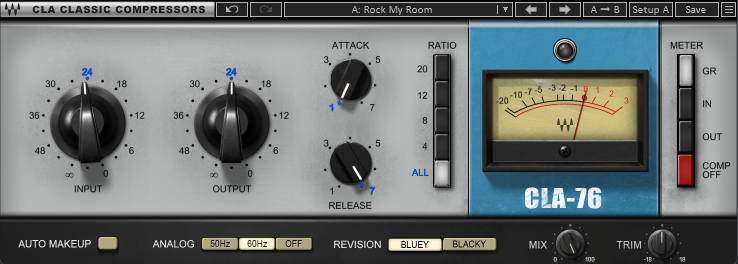
Better New York-style Compression By Craig Anderton New York-style compression is a processing technique used primarily for drums. In addition to compression for a fat sound, adding dry audio in parallel restores some of the original dynamics. The popularity of this technique has inspired many compressor plug-ins (even emulations of vintage compressors) to include a
Better New York-Style Compression Read More »
Introducing the Updated Rok Box MC Micro Big Power. Ultra-Compact. Built for Creators. The latest evolution of the Rok Box MC Micro from PCAudioLabs redefines what a compact production system can do. Designed for modern creators, this updated micro workstation combines next-generation Intel Core performance, massive memory capacity, and cutting-edge storage into a pint-sized powerhouse.
Updated Rok Box MC Micro Read More »

In the days of steam-powered DAWs, channel inserts generally had serial routings. Fortunately, ways to create parallel and series-parallel routings (fig. 1) are becoming more common. These provide more sophisticated processing options: A parallel routing splits the signal into two or more parallel paths, and usually mixes them back together. This is a way to
Parallel Effects Routing for DAWs Read More »
Is the Intel Core Ultra 9 285K CPU Good for Audio Production? Audio producers live in the intersection of low latency, high track counts, and complex plugin chains. The Intel Core Ultra 9 285K is Intel’s latest flagship Arrow Lake-S processor, and it brings a suite of features tailor-made for modern DAWs. Thanks to a
Is the Intel Core Ultra 9 285K CPU Good for Audio Production? Read More »
It’s true: You do not need to buy more speakers or re-arrange your workspace to get started with immersive audio. Dolby Atmos is scalable, from complex surround systems down to a two-channel immersive format that works exclusively with headphones or earbuds. Because many people listen to music over headphones, and mixing on headphones is doable,
Immersive Audio for the Rest of Us: Guest Post by Craig Anderton Read More »
Gain Staging: Why It Matters, and How to Do It By Craig Anderton Gain staging optimizes levels within a project. This promotes intended plugin behavior, preserves dynamics, and potentially minimizes distortion and noise. Unlike analog recording, the goal with digital recording is not to have as high a level as possible short of 0 dB.
Gain Staging: Why It Matters, and How to Do It: Guest Post by Craig Anderton Read More »
Build a Cheap Pro Audio PC: The Truth YOUR COMPUTERS COST TOO MUCH! The most common question or comment we get on our social posts and ads: I COULD BUILD IT CHEAPER MYSELF LOL Here’s the deal; we don’t do comparisons to PCPartPicker builds or self-builds. We’re not in that business, we
Build a Cheap Pro Audio PC Read More »